1. Caramel dress with the wrong undertone shoes
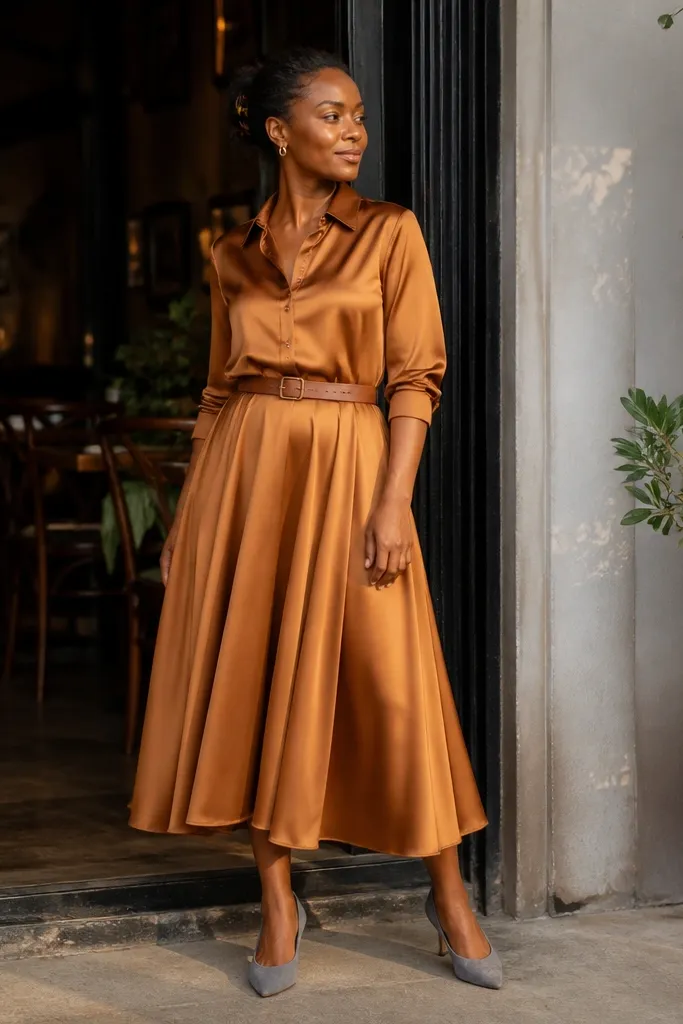
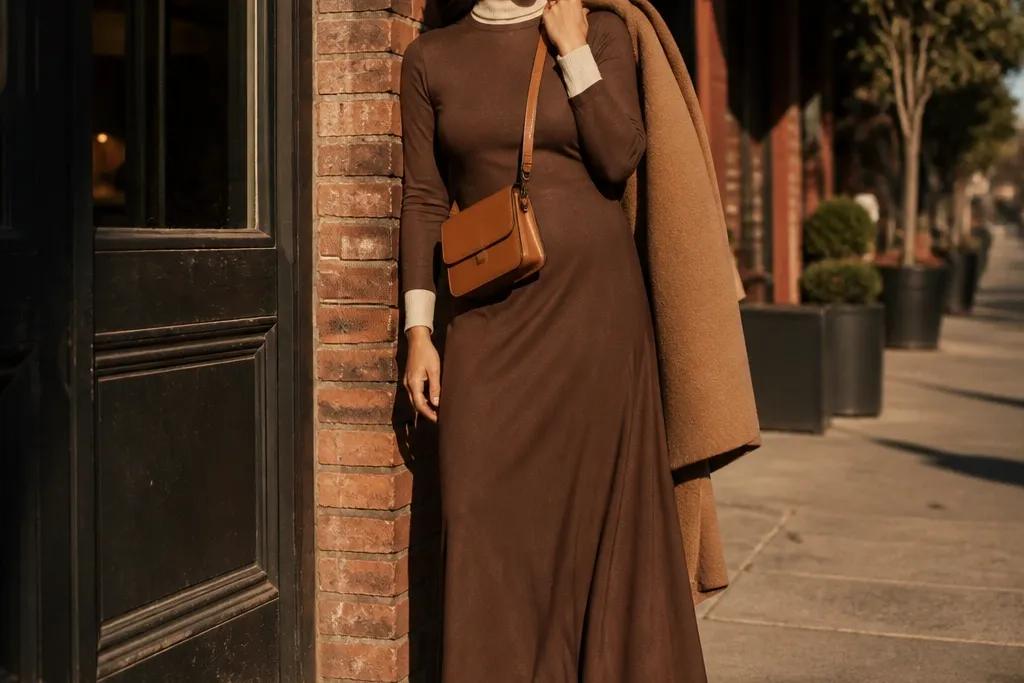
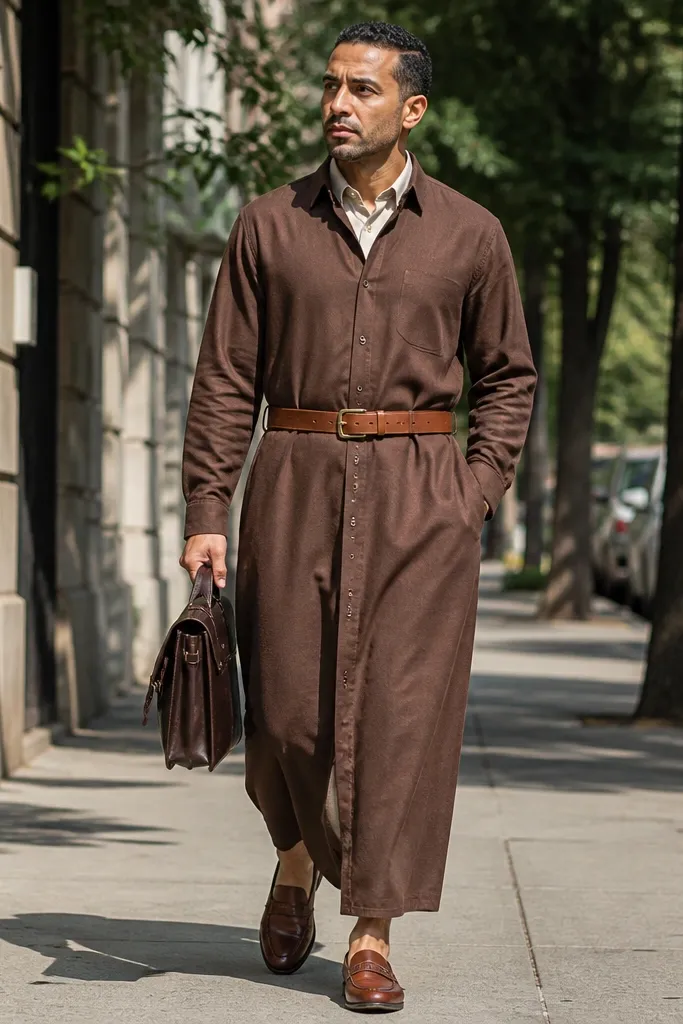
Caramel and light brown dresses look best with warm shoe tones because they mirror the dress’s golden cast. If you pair a caramel dress with ash gray or cool taupe shoes, the outfit looks “off” even if the colors are technically neutral. Warm browns like cognac, toffee, and medium chocolate keep the palette cohesive and make your skin look brighter. This works for most skin tones because warmth in the footwear creates a flattering glow effect against the dress. The styling principle is undertone matching: warm brown + warm accessories, cool brown + cool accessories.
Start by choosing shoes in a warm brown shade (cognac or toffee) or a cream/off-white if you want contrast. Then pick a bag that matches the shoe temperature, not the dress color exactly — close is fine, but the undertone must agree. Finally, add jewelry in gold or antique gold tones if the dress is warm caramel; silver works only when the dress itself is cool cocoa/espresso.
If you only own one pair of shoes, build the outfit around shoe undertone instead of trying to force the dress to match.
Avoid pairing warm caramel dresses with cool gray-brown footwear.
2. Chocolate dress + black belt and black bag
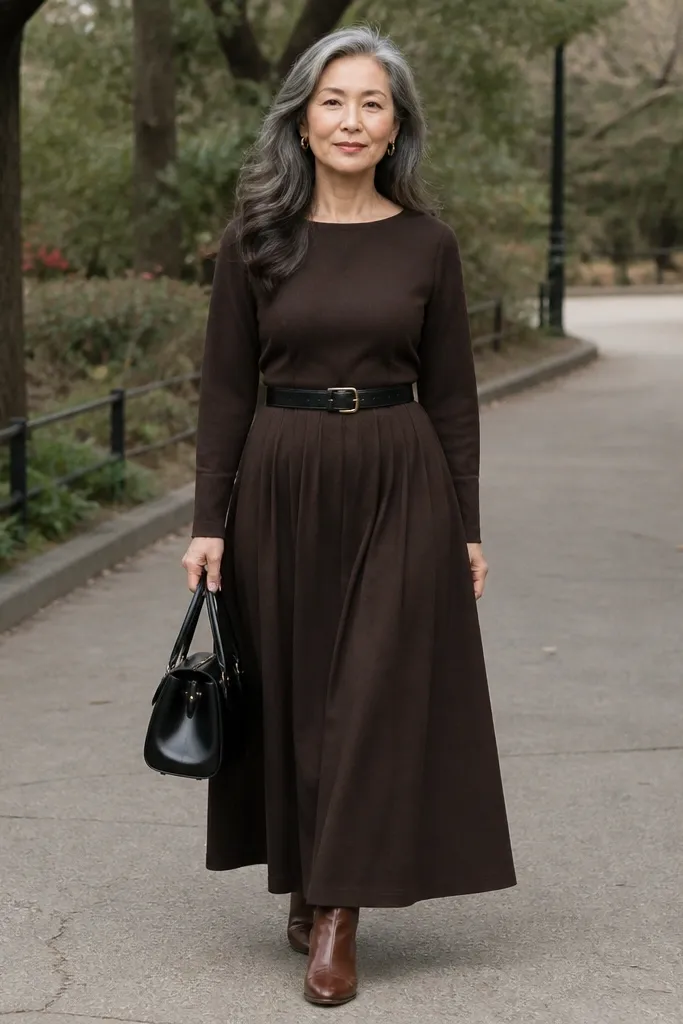
Chocolate brown looks natural with brown accessories because black can read harsh next to deep brown, especially in daylight. When you add a black belt and black bag, the outfit often looks like separate pieces instead of one line. Brown-on-brown gives a smoother visual flow and makes the waist area look intentional. This is flattering on all body types because it reduces contrast at the midsection, so the eye doesn’t get yanked to the belt like a hard bar. The principle is color harmony: use brown or cream accents around the belt line, not pure black.
Swap the black belt for a belt in cognac, dark brown, or espresso with a similar shine level to your shoes. Choose a bag in cream, caramel, or matching chocolate so the midsection stays cohesive. If you want a darker accent, pick a very dark brown belt rather than black and keep the hardware consistent across belt and bag.
Try a belt that’s 1-2 shades lighter than the dress; it defines the waist without creating a stark stripe.
Avoid using pure black accessories with chocolate-brown dresses.
3. One-tone head-to-toe brown
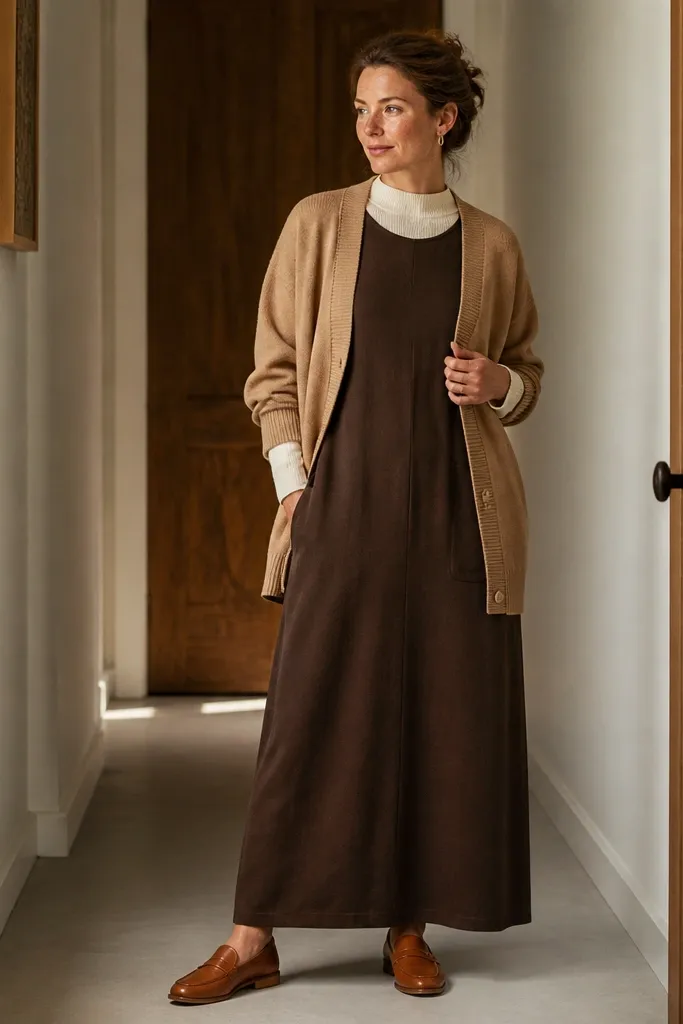
Pick one brown anchor (your dress) and keep the rest in neutrals: one lighter (cream, oatmeal, sand) and one mid-tone (camel, cognac, toffee). Add shoes in the mid-tone and a bag in the lighter neutral to create a clean separation near the face. Finish with a belt or cardigan in the mid-tone so the outline stays structured.
A one-tone brown outfit can look flat because your eye needs contrast to separate the dress from the styling. Budget versions often feel heavier when everything is the same depth and saturation. The fix is simple: keep the dress as the anchor, then add two neutrals with different lightness. Think cream + camel, or cognac + off-white. This makes the outfit look more “designed” even if every item is affordable. The principle is contrast control — you want depth variation, not a random clash.
Watch outAvoid matching shoes, belt, and bag to the exact same brown shade as the dress.
Good to knowIf you’re unsure, choose cream as the lighter neutral. It fixes more brown outfits than you’d think.
4. Flat, thin fabric that clings at the hips
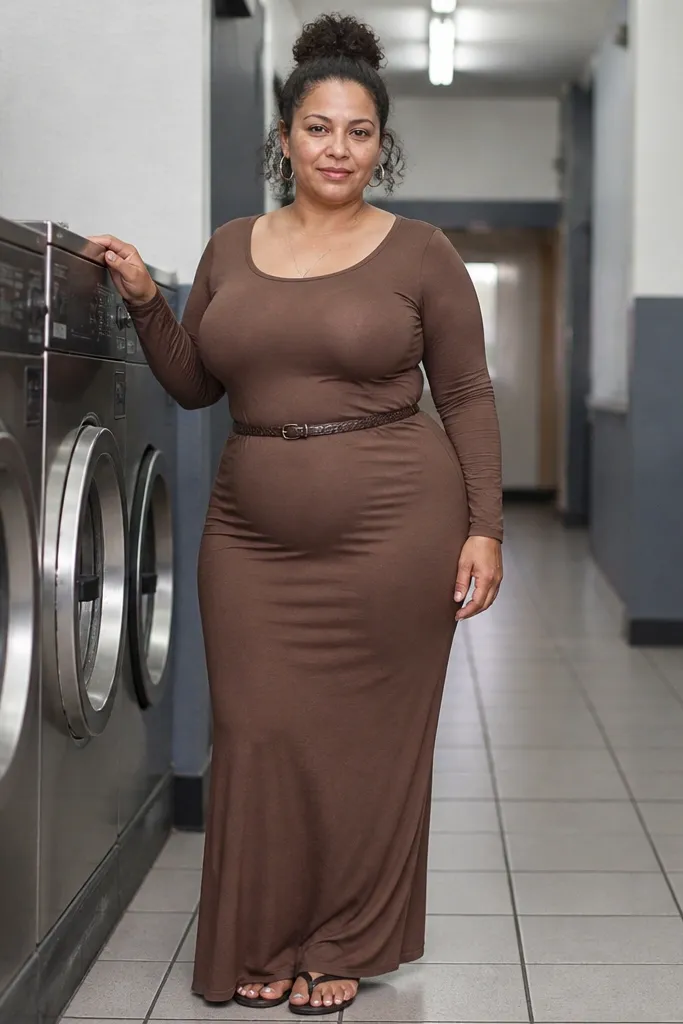
Budget long dresses often use thin fabric that sticks to underwear lines and creates wrinkling where you don’t want it. That cling makes the whole look feel cheaper even with good accessories. Look for thicker weaves or blends that hold shape — jersey that drapes smoothly, or rayon/viscose that falls in soft folds. If the dress is clingy, the outfit reads “unplanned” because the silhouette isn’t clean. The principle is fabric behavior: you want controlled drape, not pressure.
When shopping, check the dress in motion: raise your arms and walk a few steps. If the fabric stretches and snaps back with visible lines, skip it. If you already own it, add shapewear that smooths the hip line and choose a slightly looser outer layer like a cropped jacket or long cardigan that hangs away from the body.
A slip-style underlayer in a matching shade makes cling dresses look 10x smoother.
Avoid clingy brown dresses without a smoothing layer.
5. No waist definition on a long straight silhouette
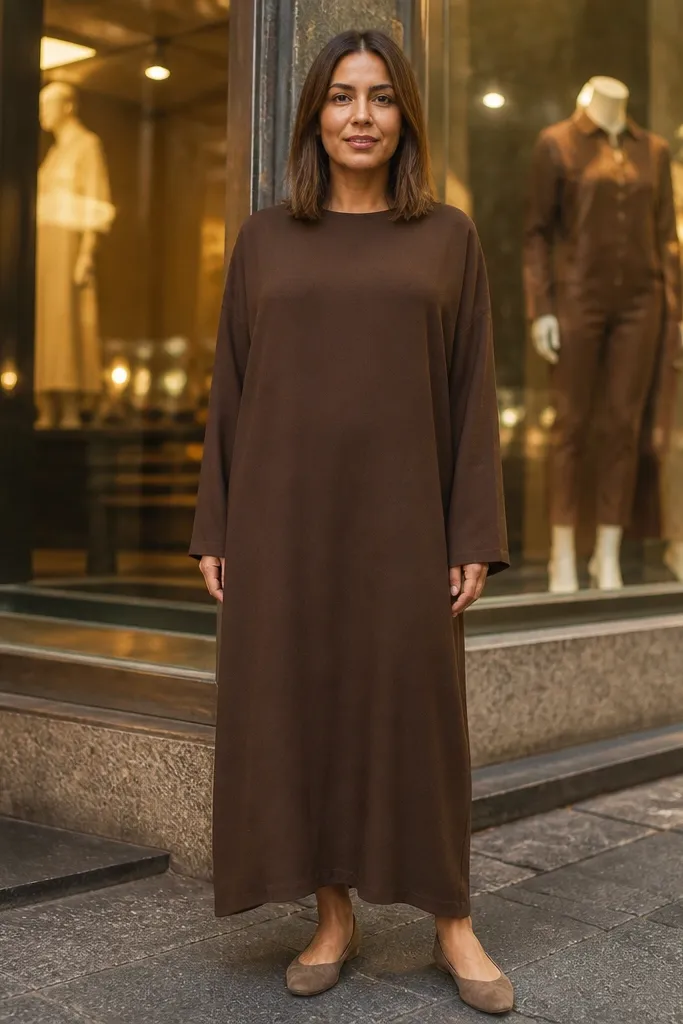
If your dress doesn’t have a built-in waist, add a belt in a matching or slightly lighter brown. Place it at your natural waist, not on your hips, and keep the belt width medium (about 1 inch) so it looks intentional. If you hate belts, use a cropped cardigan that ends right at the waistline or a fitted long-sleeve layer that stops above the belt area.
A straight drop dress can work, but the budget mistake is wearing it without any waist definition at all. Without shaping, the dress can turn your torso into one long rectangle — especially if the fabric is thin or slightly matte. Adding a belt or choosing a dress with seams changes everything because it creates a visual waist line and breaks up the length. This is flattering for most body types because it gives structure even if you’re not adding volume. The principle is proportion: long length needs a break point.
Watch outAvoid wearing straight-drop long dresses with no belt or waist shaping.
Good to knowChoose a belt with a matte buckle if your dress fabric is matte; shiny hardware can look too harsh.
6. Wrong hem length that puddles at the ankles
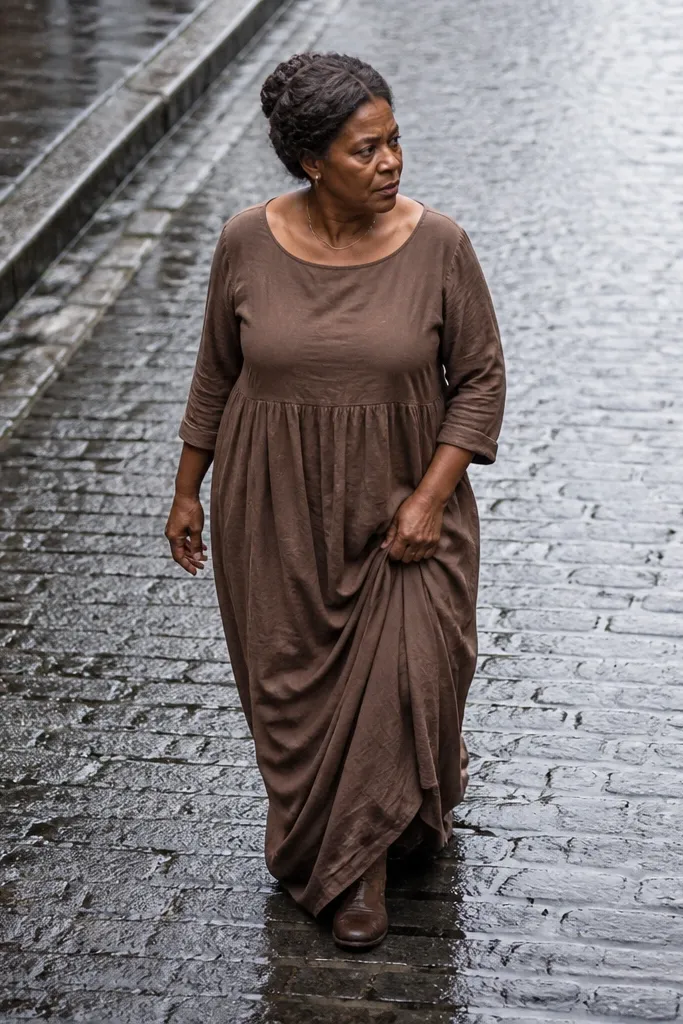
If you can, hem the dress to hit the ankle bone when you’re wearing your intended shoes. If you can’t tailor, wear a shoe with a higher vamp so the hem doesn’t collapse onto the ground. For flats, choose a slightly higher hem or add a subtle hem clip; for heels, keep the dress from dragging by selecting footwear that lifts the hem line.
Hem puddling is one of the fastest ways a budget Brown long dress outfit looks messy. When fabric bunches at the ankle, it adds bulk and hides your shoe line, which makes your whole outfit look heavier. The fix is tailoring or styling: you want the hem to skim or land cleanly at the ankle bone. This matters for petite and tall frames because both can suffer from the same problem — too much fabric at the bottom. The principle is clean lines: the hem should create one clear edge.
Watch outAvoid puddled hems that fold over your shoes.
Good to knowIf the dress drags, it will wrinkle and look tired fast. Fix the hem before buying accessories.
7. Thin belt + oversized dress = cheap proportions
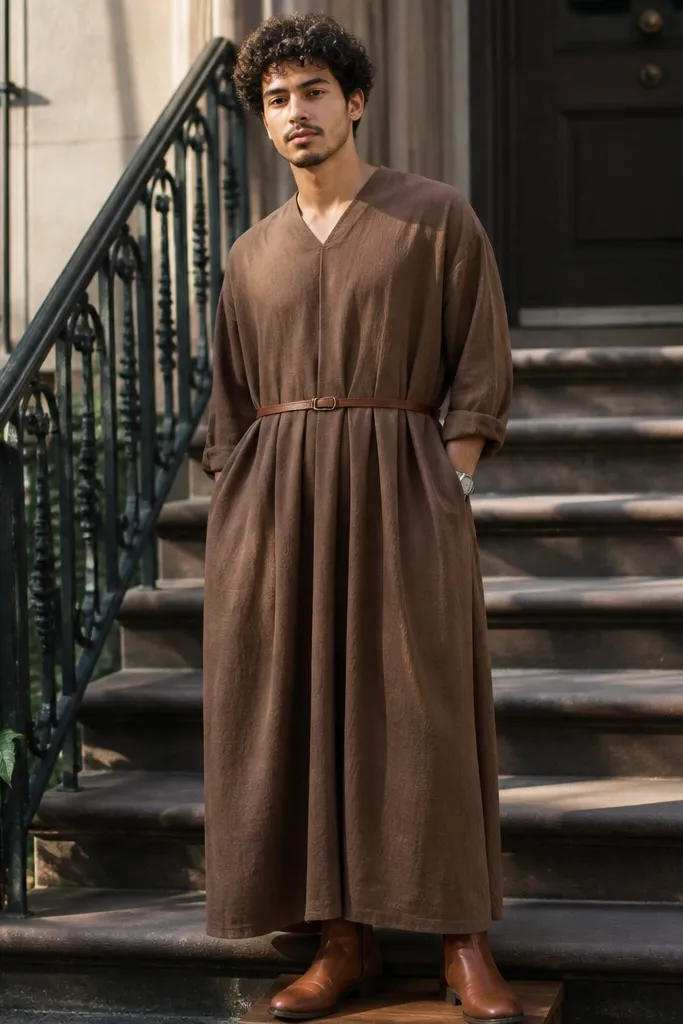
Measure belt width against your waist — if it’s thinner than your finger width, it usually disappears. Choose a belt width around 1 to 1.5 inches and match the belt color to your shoes or one shade lighter than the dress. If the dress has a busy print, keep the belt plain and matte so it anchors the look instead of competing.
A very thin belt on a long dress can vanish visually, especially if the dress fabric is textured or the skirt is full. Then the waist doesn’t look defined, and the outfit reads like “a dress with a random belt.” A better move is a belt that has enough width to create a clear line. Medium-width belts (about 1 to 1.5 inches) look balanced with long hems. This creates structure without making the outfit look like costume styling. The principle is proportion: the belt should visually match the dress scale.
Watch outAvoid belts so thin they disappear against the dress.
Good to knowTry a belt with a simple buckle; big decorative buckles can look costume-y with budget dresses.
8. Loud prints and loud jewelry fighting the dress
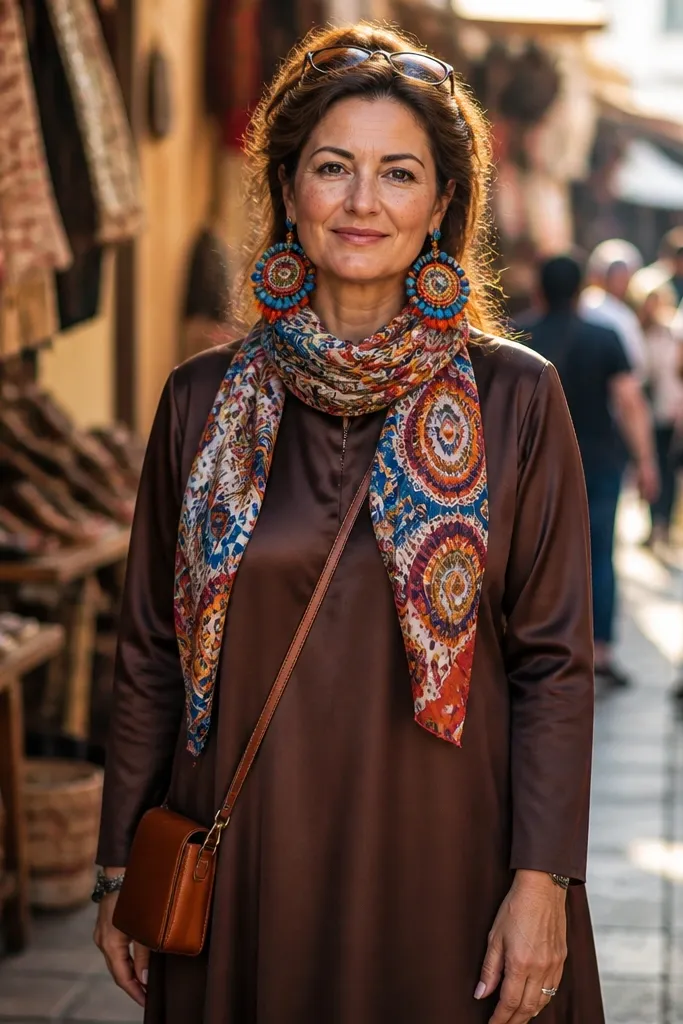
If the dress is printed, choose one jewelry type: either small hoops or a delicate pendant, not both. Keep metals consistent — gold with warm browns, silver with cool browns. For solid brown dresses, you can add one extra detail like a cuff bracelet, but keep earrings simple and avoid mixing multiple bold textures like beads plus rhinestones.
If the dress already has a pattern, adding chunky statement jewelry often makes the outfit feel crowded. Budget pieces tend to have one area that looks slightly “busy” — the print, the buttons, the texture. When you add loud jewelry on top, it tips into clutter and the whole outfit loses polish. For brown dresses, plain gold hoops or a simple pendant usually looks more expensive than a big multi-stone piece. The principle is focus: one hero detail, not three.
Watch outAvoid stacking statement jewelry on top of a patterned or textured dress.
Good to knowIf you wear a bold necklace, remove bracelets and keep the earrings small.
9. Boring shoes that look too casual
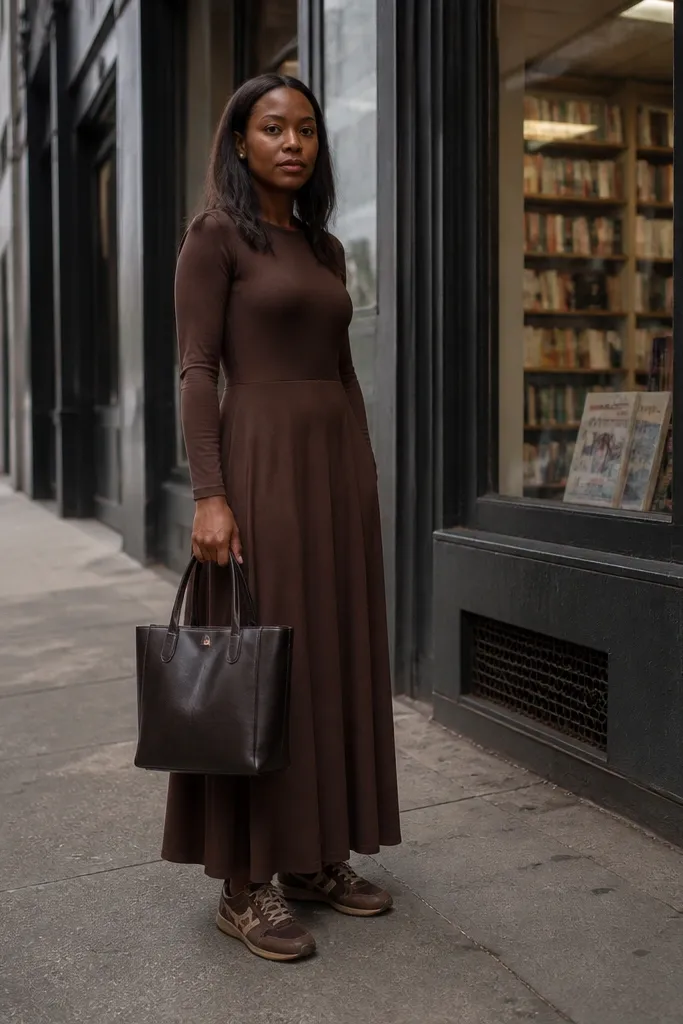
Sneakers aren’t automatically wrong, but a budget mistake is using worn, scuffed, or very sporty sneakers with a long dress. It breaks the dress’s “occasion” feel and makes the outfit look like you dressed in a hurry. Brown long dresses pair better with shoes that have cleaner lines: Chelsea boots, loafers, strappy sandals, or low block heels. You want a shoe that matches the dress’s vertical elegance. The principle is shoe line: the footwear should echo the dress length.
Choose one shoe direction: boots for cooler weather, loafers for daytime, or sandals with a slight heel for warm outfits. Stick to brown, cognac, or cream tones so the shoe doesn’t fight the dress. If you only have sneakers, pick clean white or tan with minimal panels and pair with a structured bag so the overall look stays intentional.
Polish or condition your shoes before styling; dull shoes make even great dresses look cheap.
Avoid scuffed sneakers or ultra-sporty shoes with long brown dresses.
10. Too many colors in a brown outfit
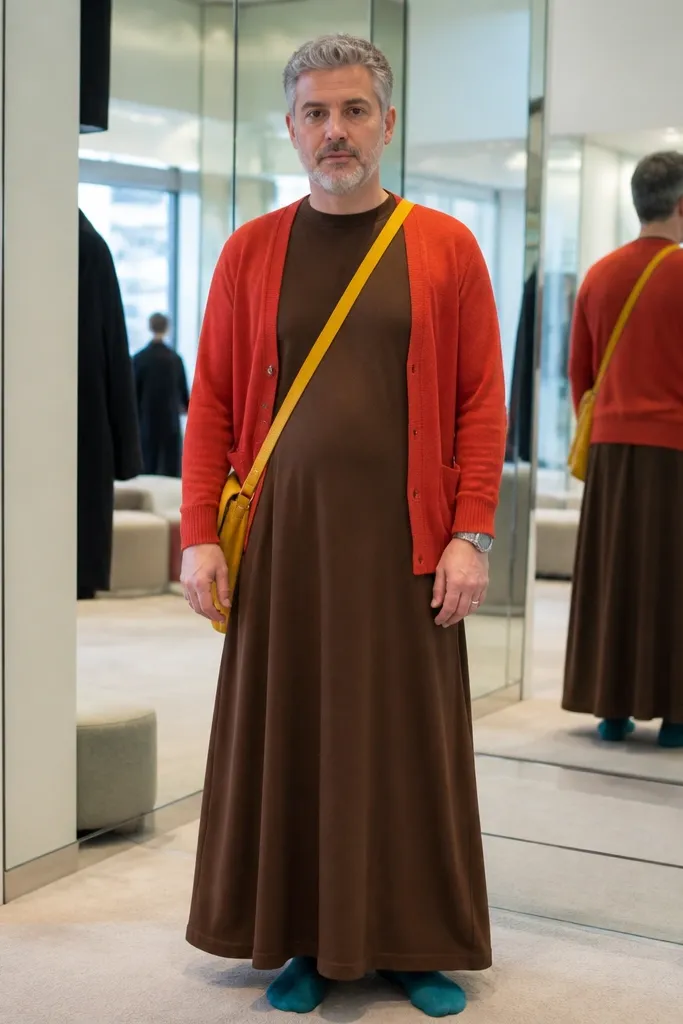
Brown is forgiving, but it’s not a free-for-all. When you add several bright colors at once, the outfit stops looking cohesive and starts looking like random leftovers. Budget Brown Dress Outfit mistakes usually happen because people try to “fix” the brown with color. Instead, keep it to two or three tones total. Brown plus cream plus one accent color looks intentional. The principle is limited palette: brown already does the heavy lifting.
Pick your base tones: dress brown plus one neutral (cream or oatmeal). Add one accent only, like rust, olive, or burgundy, and keep it in one item (a scarf or bag). If you add an accent scarf, keep shoes and belt in neutrals so the accent doesn’t multiply across the outfit.
Rust and olive work especially well with warm browns because they share golden undertones.
Avoid mixing three or more bright colors with a brown dress.
11. Wrong bag shape for a long dress
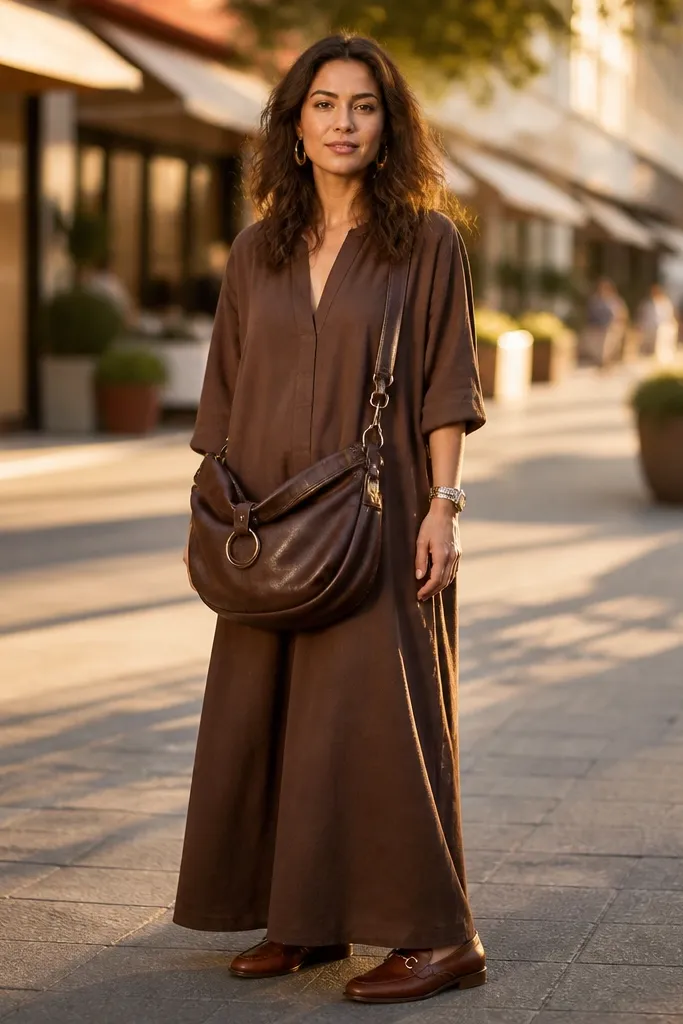
Bag placement and shape matter because long dresses already pull the eye down. A low-hanging crossbody can make the outfit feel bottom-heavy and messy, especially if the bag is bulky. The fix is choosing a bag that sits higher or has a cleaner profile. Structured mini bags and top-handle bags look more balanced with long silhouettes. The principle is vertical balance: your bag should not compete with the hem line.
If you use a crossbody, shorten the strap so the bag sits around upper waist or mid-torso. Choose a bag with a simpler shape and less hardware if your dress already has details. For a more polished look, go with a top-handle bag or small clutch and keep it in cream, cognac, or matching chocolate.
If the bag touches your hips when you walk, shorten the strap immediately.
Avoid long dress outfits with a bulky bag hanging too low.
12. Rough fabric outer layers that add texture chaos
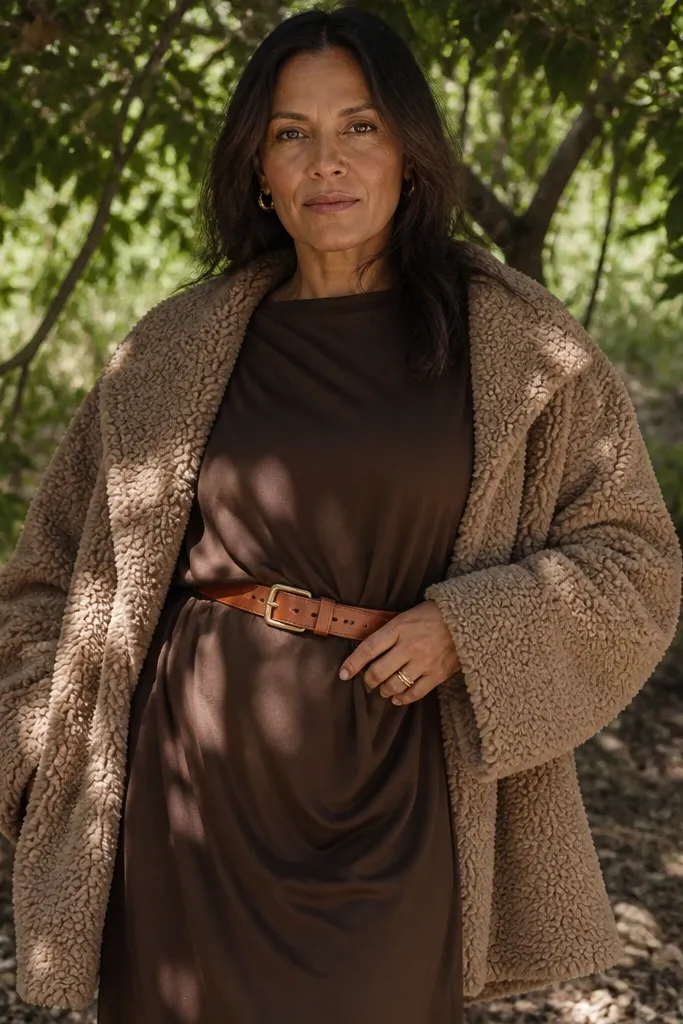
Brown dresses can look expensive when the fabric feels smooth and the layers feel intentional. A common budget mistake is adding a rough, fuzzy, or very chunky outer layer that clashes with the dress texture. Texture overload makes the outfit look heavy and unfinished. If your dress has a soft drape, pair it with a smoother jacket or a fine-knit cardigan. This works because the contrast between smooth outerwear and fluid dress fabric looks designed. The principle is texture pairing: smooth with smooth, or smooth with light texture — not rough everywhere.
Match your outer layer weight to the dress fabric: thin dress gets a lightweight cardigan, heavier dress gets a tailored jacket. Keep the outer layer color in a neutral range: camel, oat, or espresso. If you choose knit, pick a tighter gauge so it doesn’t look shaggy against the dress. Button or tie the outer layer so it ends near the waist and doesn’t add extra bulk at the hem.
Choose one texture only. If the dress is textured, keep the jacket smooth.
Avoid pairing a smooth long dress with very chunky, rough outerwear.
13. Overly warm orange-brown that clashes with your skin
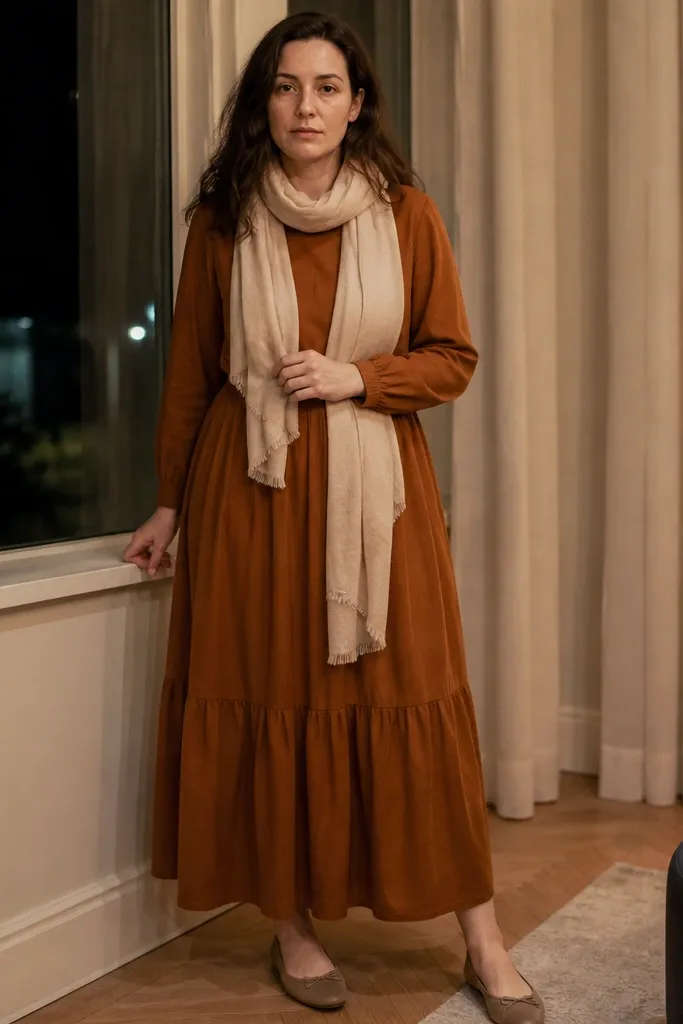
Hold the dress fabric near your jawline in daylight and compare it to your natural skin color. If it pulls yellow/orange, swap the dress shade or balance with cooler accessories like taupe, soft gray, and silver-toned jewelry. If you already own it, reduce the orange effect by pairing with cream instead of other warm beiges and choose a cooler lipstick tone to keep the face from looking muddy.
Some browns lean orange and can make your skin look sallow, especially if your undertone is more neutral or cool. Budget Brown Dress Outfit mistakes happen when people buy the most “trendy” brown shade without checking face brightness. If the dress makes you look tired or the under-eye area looks darker, the shade is fighting you. A cooler medium brown like espresso-cocoa, or a softer taupe-brown, often looks more flattering and polished. The principle is skin harmony: the dress should brighten your face, not compete.
Watch outAvoid orange-leaning brown dresses if they make your face look dull.
Good to knowCream beats warm beige with orange-leaning browns; it neutralizes the orange tone.
14. Too short sleeves or messy neckline finishing
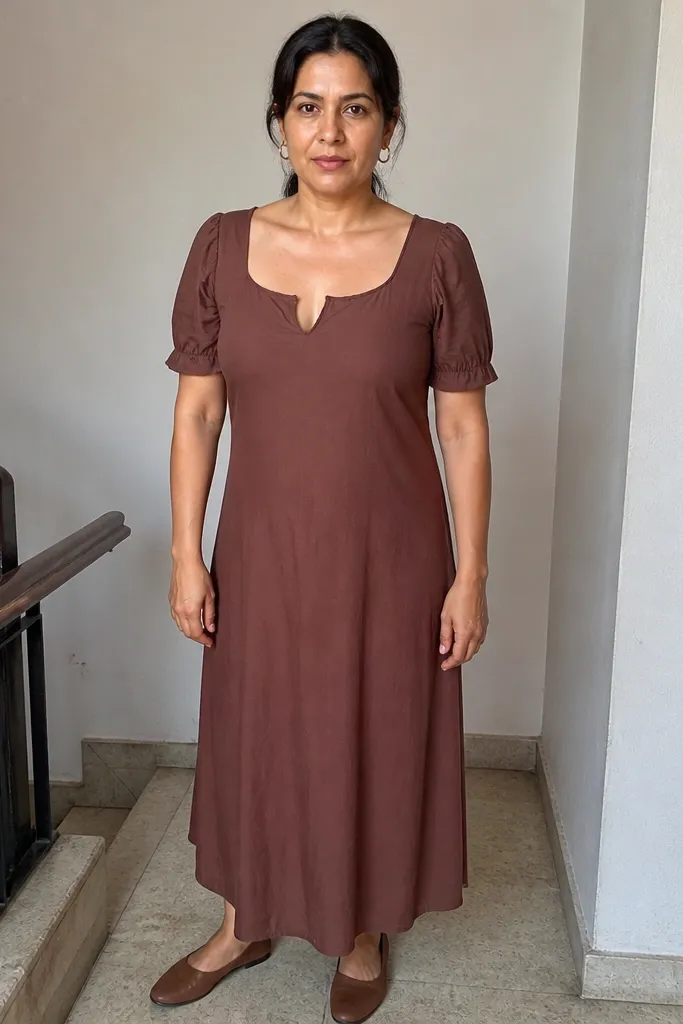
Check neckline behavior by moving: raise your arms and look in a mirror. If it shifts or gapes, use fashion tape or a small safety pin at the inside seam to keep it centered. For sleeves, choose a length that hits mid-bicep or just above the elbow; if yours bunch, add a fitted layer like a thin long-sleeve top underneath in cream or brown. Keep collars and scarves simple so the top area stays neat.
Neckline finishing and sleeve length are where budget dresses show their quality fast. A neckline that gapes, twists, or sits too low can make the outfit look sloppy no matter how good the shoes are. Short sleeves that bunch or ride up also create visual clutter at the upper body. The fix is fit — either tailor the neckline or style it with a layer that sits correctly. This is flattering because it frames the face and shoulders cleanly. The principle is clean lines at the top: shoulders and neckline should look intentional.
Watch outAvoid dresses with gaping necklines or bunched sleeves without fixing them.
Good to knowUse fashion tape on the inside corners of the neckline before you judge the dress.
15. Matte dress + shiny plastic-looking belt hardware
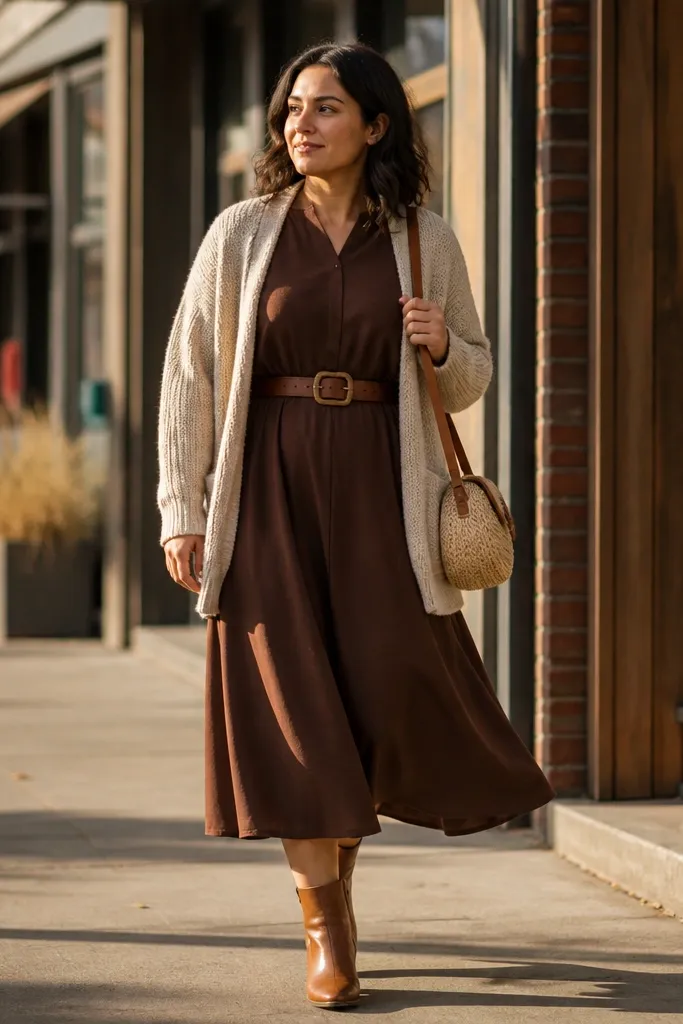
Look at your belt buckle and bag hardware in daylight. If it looks like shiny plastic, swap to a matte buckle in dark brown or antique gold. Pair smooth leather shoes with smooth leather accessories; avoid combining a suede shoe with glossy patent accessories. Finally, keep one hardware tone across the outfit so it looks planned, not random.
Hardware finish is a cheap-out tell. A matte brown dress looks smooth and grounded, but a shiny plastic-looking belt buckle or bag hardware makes the whole outfit look budget. You don’t need expensive items — you need consistent finishes that look like real metal or real leather. If your dress fabric is matte, keep accessories matte or softly satin. If your dress is glossy, you can go with more shine in the accessories. The principle is finish matching: surface texture should agree across the outfit.
Watch outAvoid shiny plastic-looking hardware next to matte brown fabric.
Good to knowAntique gold and dark brass finishes look better with brown dresses than bright chrome.