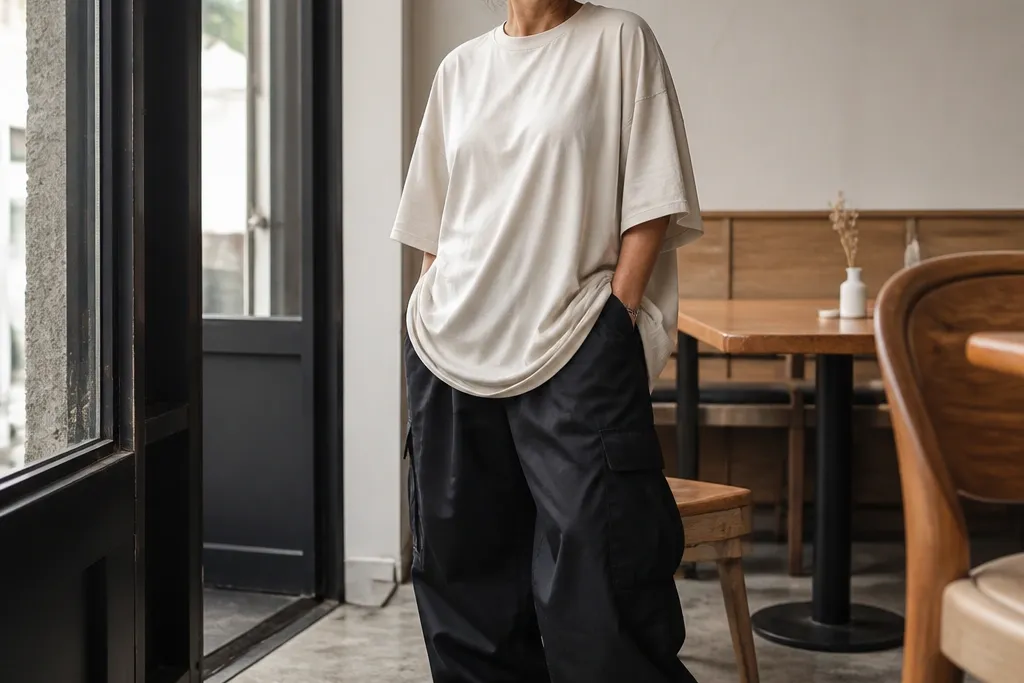

1. Cream oversized tee + black wide-leg cargos
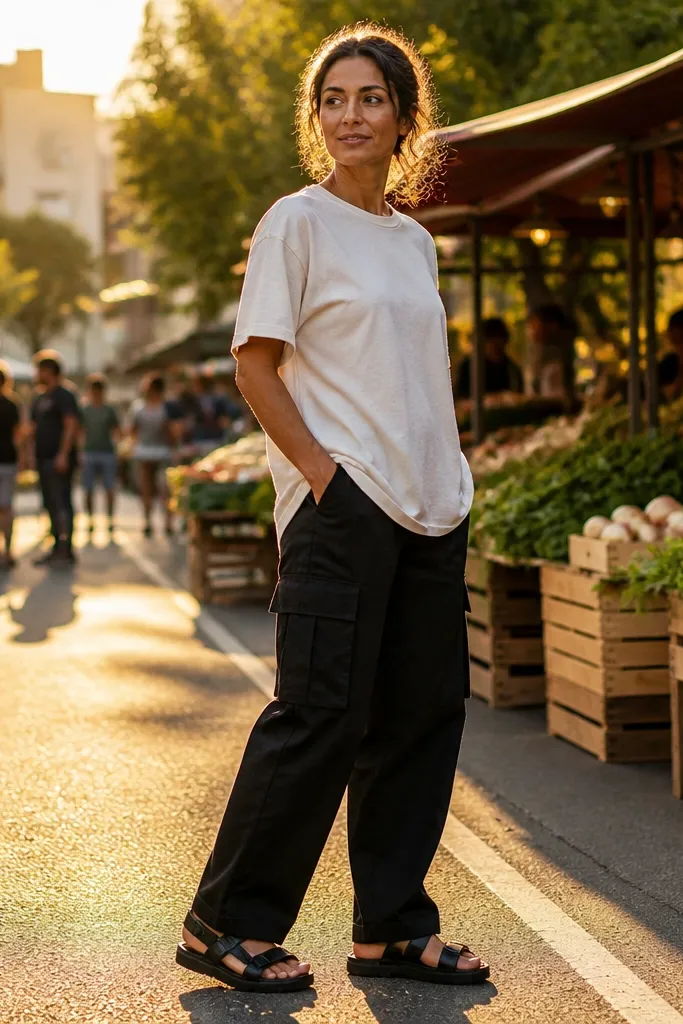
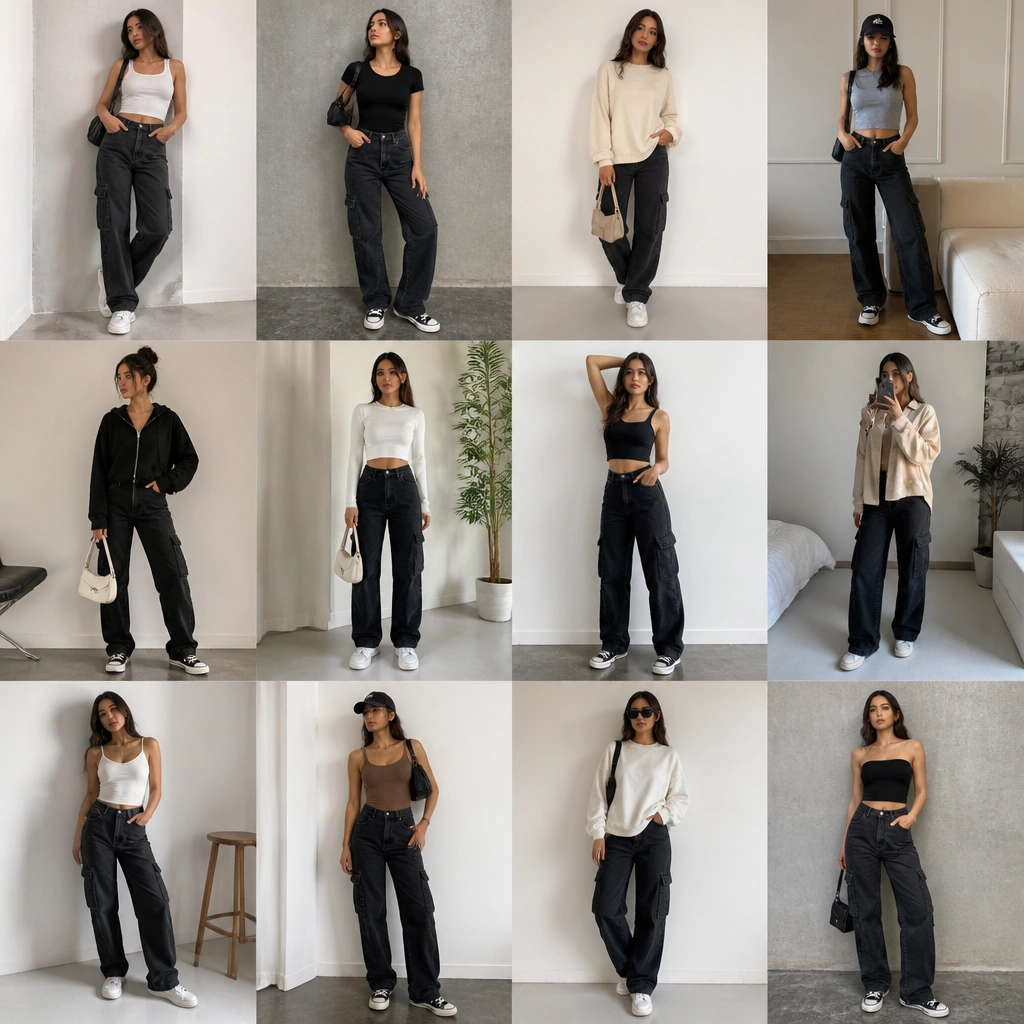
This outfit drawing works because it’s one big shape from top to bottom, then you add a sharp visual anchor at the shoes. Start with a cream or off-white oversized tee that hangs past the waistband by a noticeable amount, around 6-10 cm in your sketch. Then go for black wide-leg cargos with a clean, straight fall — not flared, just wide and steady. The contrast is simple: light top against dark bottom, which makes the silhouette pop even with minimal shading. It looks good on most body types because the tee adds comfort at the shoulders while the cargos create a long leg line when you keep the hem level.
Good to knowAdd one subtle side fold under the tee hem to sell drape.
Step 1: Draw the tee silhouette first — shoulders wider than your torso, then a hem that drops below the belt line. Step 2: Add wide-leg cargos as two straight outer lines from upper thigh to hem, with one cargo pocket seam line per side. Step 3: Finish with black low-top sneakers and a slightly thicker sole line so the bottom doesn’t look weightless.
Watch outDon’t draw the tee hem touching the waistband — that kills the baggy effect.
2. Denim jacket over a graphic hoodie + tapered baggy pants
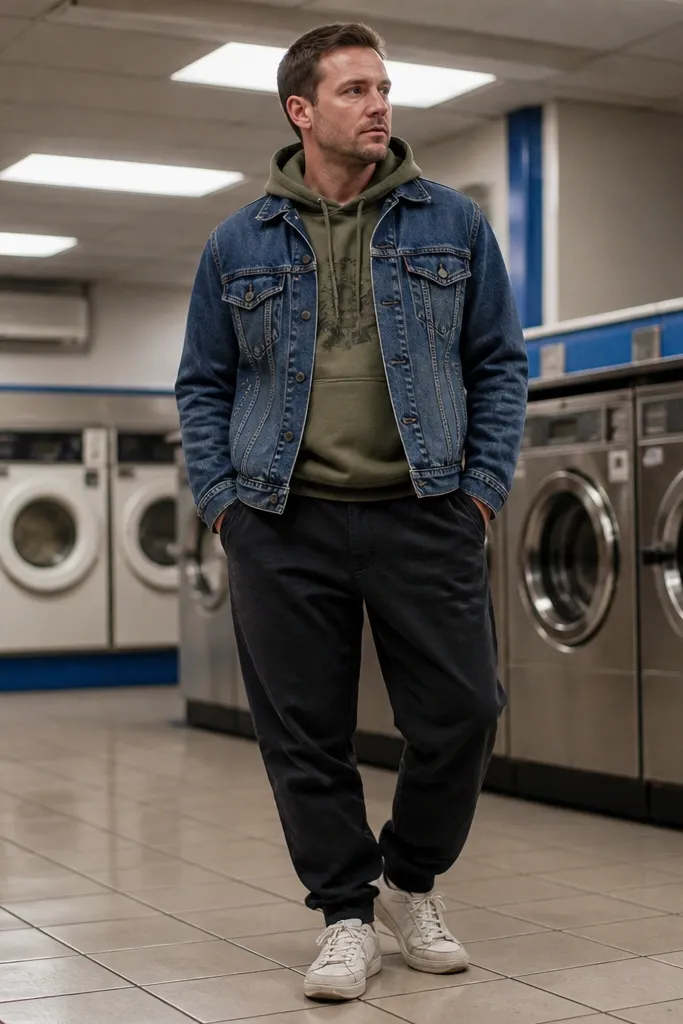
Layering is the easiest way to make a baggy outfit look styled in a drawing. This combination gives you structure from the denim jacket (clear collar, cuffs, and button line) and softness from the hoodie. Choose a graphic hoodie in muted tones like olive, slate, or washed black so the sketch doesn’t look too busy. The pants are the key: go baggy but tapered at the ankle so the legs don’t become one giant blob. This works especially well for beginners because jackets give you definite edges to practice, and the taper gives your proportions a focal point.
Good to knowKeep the jacket length just at the hip to avoid turning it into an overcoat shape.
Step 1: Sketch the denim jacket outline first — collar shape, front opening, and cuff edges. Step 2: Under it, draw the hoodie hood sitting high behind the neckline and keep the hoodie hem peeking 2-4 cm below the jacket. Step 3: Draw baggy pants with wide thighs and a clear narrowing toward the ankle, then add simple sneakers to complete the silhouette.
Watch outDon’t make the pants flare out at the ankle — beginners lose leg structure.
3. Striped long-sleeve tucked into oversized pleated trousers
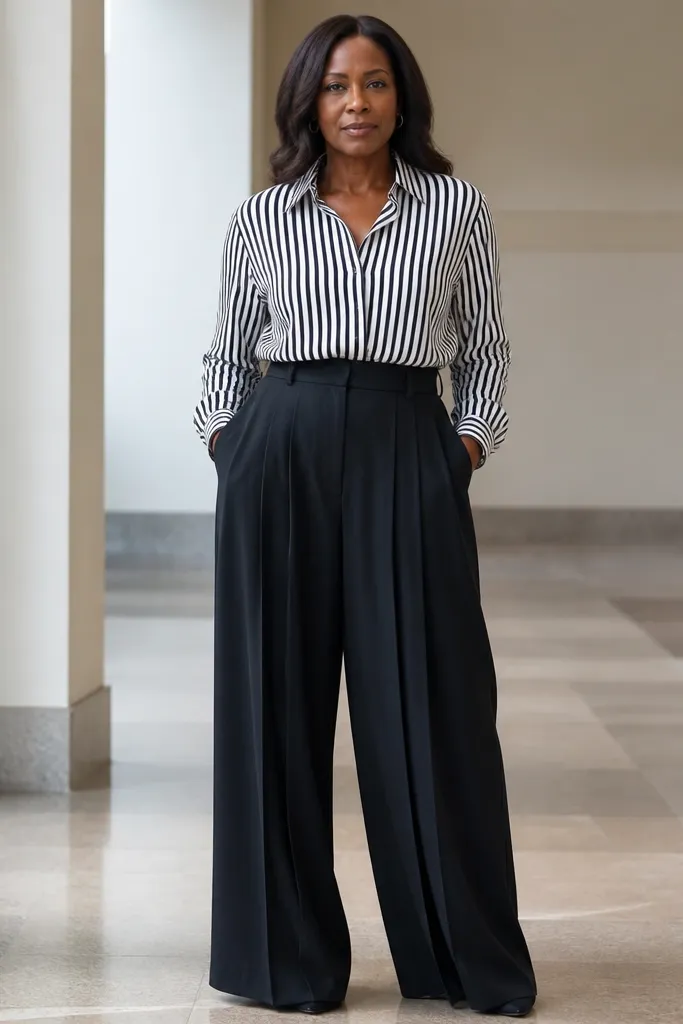
This is a clean, aesthetic baggy look because it uses a sharp waistline move to balance volume. Start with a striped long-sleeve (black/white or navy/cream) and tuck it fully or do a partial tuck that shows a smooth waistband line. Then draw oversized pleated trousers with wide legs and visible pleat direction — pleats make baggy fabric look intentional instead of wrinkled chaos. Pleated trousers also give you great lines for drawing practice, especially at the upper thigh where pleats fan out. This works well for people who want baggy without looking too bulky, since the tuck keeps the torso defined.
Step 1: Draw the striped top with a straight, fitted-ish torso and a clear tuck point at the waistband. Step 2: Add pleated trousers by drawing 3-4 pleat lines from waist to upper thigh, then let the outer edges fall wide to the hem. Step 3: Use a simple belt line and finish with loafers or low boots so the bottom looks grounded.
Make the pleats slightly wider at the top and softer toward the knee for a natural hang.
Don’t draw random wrinkles on pleats — pleat lines must be consistent.
4. Oversized bomber with nylon sheen + baggy shorts + long socks
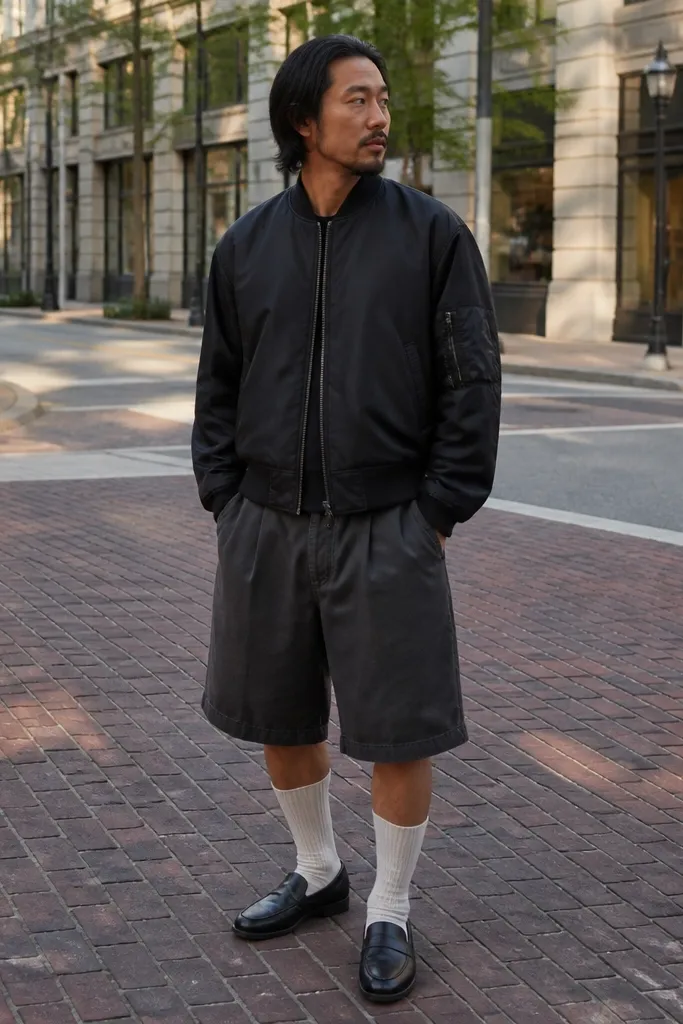
If you want your drawing to look stylish fast, use materials that read visually even with simple shading. A nylon bomber has a slight sheen, so you can add a highlight stripe on the sleeve and collar to make the fabric look premium. Pair it with baggy shorts that sit mid-thigh, not too short, and add long socks to create a vertical rhythm. This outfit is photogenic because it has height contrast: wide top + shorter bottoms + tall socks. It flatters a lot of builds because the socks lengthen the leg line, and the bomber adds shoulder volume without swallowing the whole frame.
Step 1: Sketch the bomber as a boxy shape with ribbed cuffs and waistband edges. Step 2: Draw baggy shorts with a slightly dropped inseam and a hem width that matches the bomber’s looseness. Step 3: Add long socks and sneakers or chunky slides, then include one highlight line on the bomber sleeve.
Use two values of gray for sheen: one medium base and one lighter highlight stripe.
Don’t make the shorts too tight at the knee — baggy has to stay baggy.
5. Black turtleneck + camel over-sized overcoat + straight baggy jeans
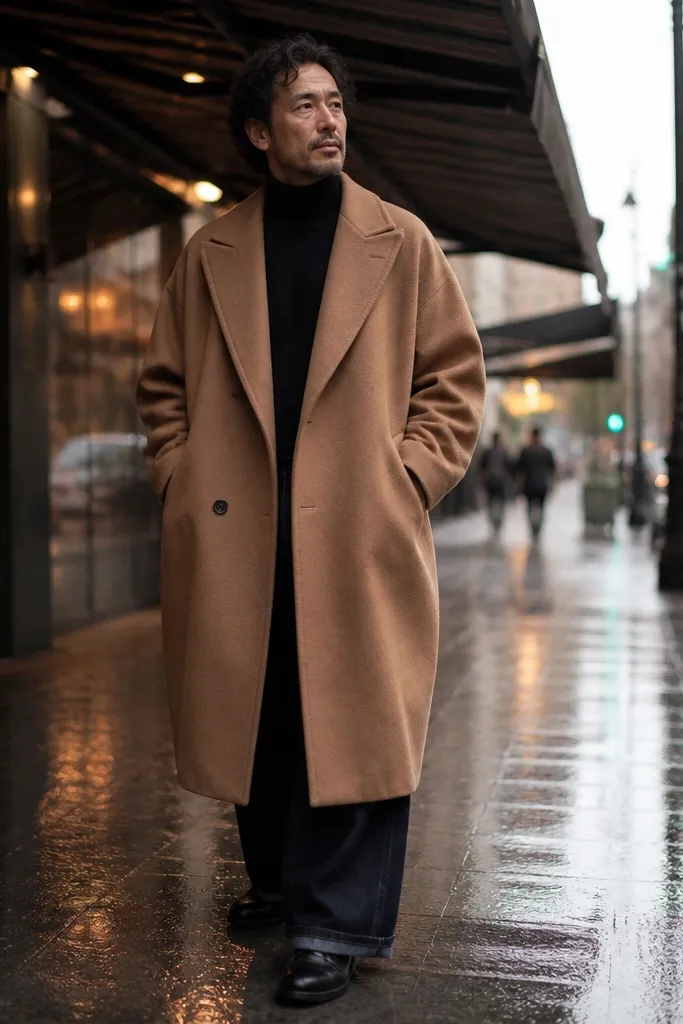
This one looks expensive on paper because overcoats give you clean silhouette lines. Draw a black turtleneck fitted at the neck and shoulders, then layer a camel oversized overcoat with a wide body and a slight taper at the hem. The jeans are straight baggy, not wide flared, so the leg line stays long under the coat. Camel overcoat over black base creates strong color contrast that reads instantly. It works for beginners because overcoats have simple geometry: collar, lapel, front opening, and sleeve volume. The result looks intentional and structured even if your shading is basic.
Good to knowAdd one beltless fold line under the coat front so the fabric doesn’t look flat.
Step 1: Draw the turtleneck first, then place the overcoat so the sleeves extend just past the wrists by 2-4 cm. Step 2: Add jeans with straight outer lines and a hem that peeks out under the coat. Step 3: Finish with black boots and keep the coat hem level across the hips.
Watch outDon’t make the overcoat hem end at the knee — it turns into a different silhouette.
6. Hawaiian shirt unbuttoned + baggy white tee + wide-leg black pants
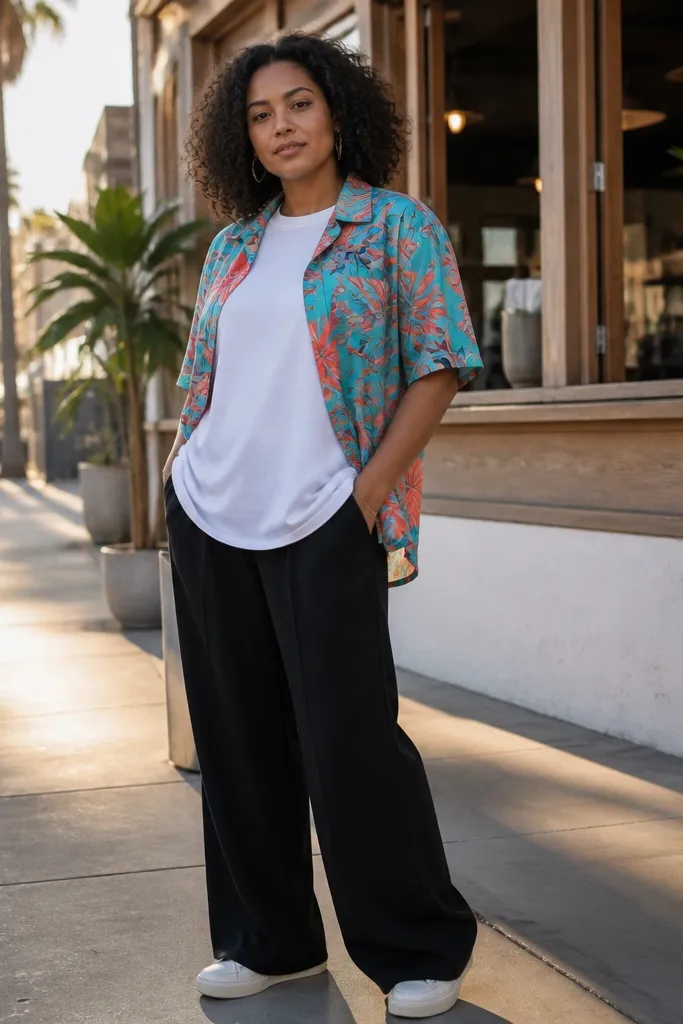
Pattern + volume looks great in sketches when you keep the layers clear. Draw a patterned Hawaiian shirt unbuttoned, with the collar and open front showing a baggy white tee underneath. The tee should be slightly longer than the shirt hem so it peeks out and adds that extra baggy cue. Then go with wide-leg black pants to calm the pattern and make the colors sit in one place. This is a strong aesthetic combo because the patterned top draws attention to the upper body while the dark wide pants create a clean base. It flatters most builds since the open shirt adds shoulder structure and the tee adds comfort around the midsection.
Step 1: Sketch the Hawaiian shirt as a relaxed open-front shape, then add the tee underneath with a longer hem. Step 2: Draw wide-leg pants with straight sides and no extra pockets drawn too heavily. Step 3: Add simple sandals or white sneakers and keep the shirt pattern in bold blocks, not tiny details.
Use 2-3 bold pattern colors maximum so your drawing stays readable.
Don’t tuck the tee fully — the peek is what sells the baggy layering.
7. Oversized plaid flannel + black cargos + beanie
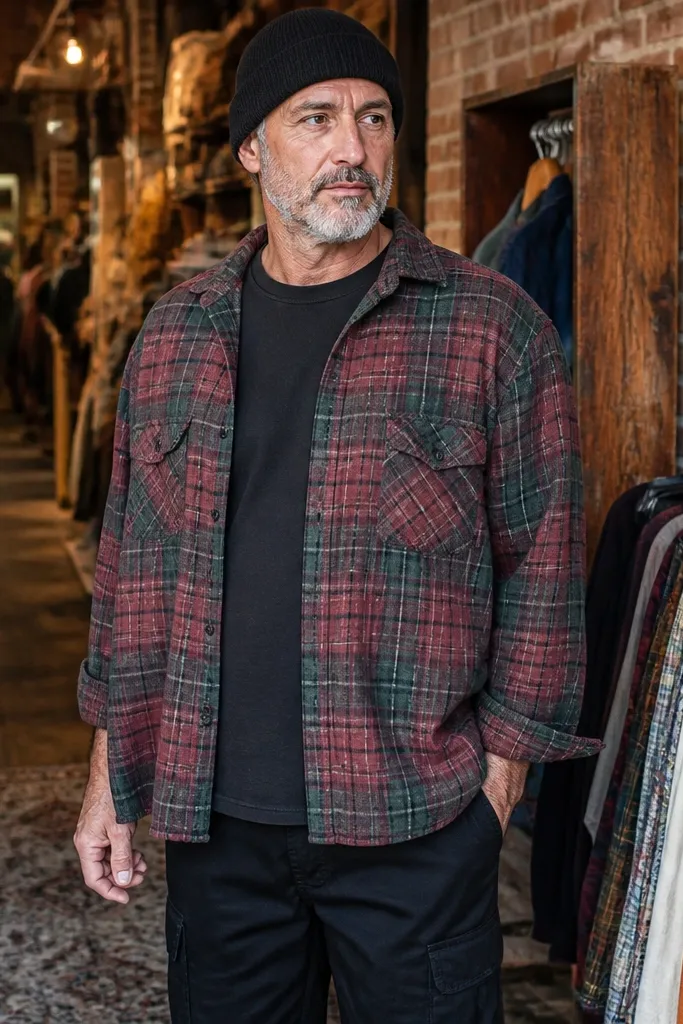
Flannel is forgiving because plaid lines guide the eye and hide messy drawing. Start with an oversized plaid flannel worn open over a dark tee, then add black cargos for the baggy bottom. Keep the flannel hem long enough to hover over the waistband, around 4-8 cm, and show one sleeve fold to create movement. The look is cohesive because plaid adds texture and shape at the top, while cargos keep the silhouette relaxed below. This is a great beginner drawing because you can practice plaid line placement without needing perfect shading. It’s also flattering because the open flannel reduces bulk at the chest and the cargos hold the leg volume.
Step 1: Draw the flannel as a loose rectangle shape with a visible open front and two large chest pockets. Step 2: Sketch black cargos with a clear waistband and wide legs, then add one pocket flap line per side. Step 3: Finish with a beanie and dark sneakers to keep the palette grounded.
Make the plaid scale medium-sized, not tiny — it’s easier to read in a sketch.
Don’t over-detail the plaid — big blocks look better than dense lines.
8. Monochrome set in washed gray: hoodie + wide jeans
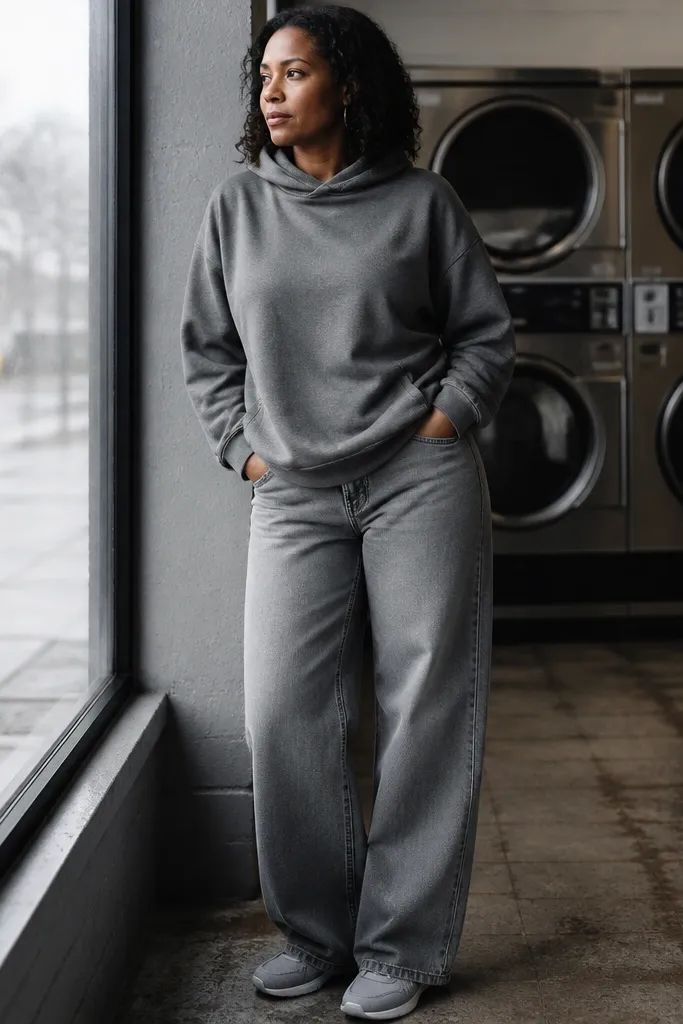
Monochrome baggy outfits look clean and modern because the eye tracks one continuous tone. Use a washed gray hoodie with a slightly rounded hem and a soft hood shape, then pair it with wide gray jeans in a similar wash. The trick is to vary fabric weight so the layers aren’t the exact same gray. In drawings, you can show this by using slightly darker gray for the jeans seams and lighter gray for the hoodie body. This outfit flatters because the hoodie adds comfort at the shoulders while the jeans create a long, unified silhouette. It’s especially good for beginners since you can focus on proportions instead of color matching.
Good to knowUse darker gray for seam lines so the outfit separates without extra colors.
Step 1: Draw the hoodie first with a visible hood opening and cuffs on the wrists. Step 2: Add wide jeans with a straight outer line and a subtle knee crease line. Step 3: Shade using two grays only, then add white sneakers for a small contrast anchor.
Watch outDon’t use flat one-tone shading — you need seam contrast to keep it readable.
9. Oversized knit sweater + cropped baggy pants + chunky sneakers
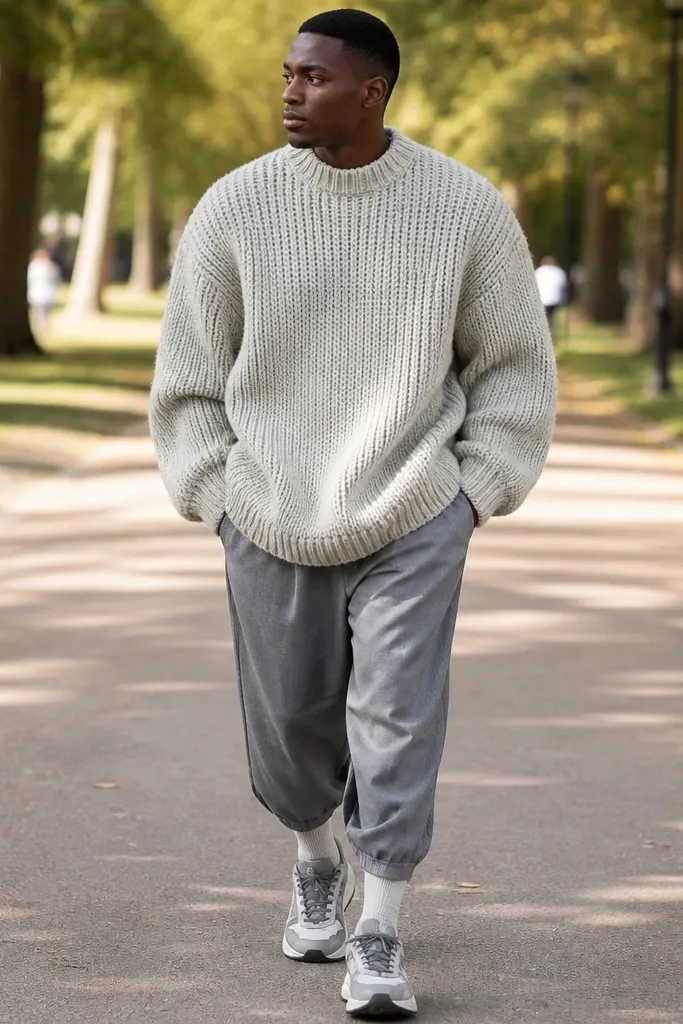
This drawing is all about leg reveal and texture. Start with an oversized knit sweater that has a thick, rounded shoulder and a hem that hangs past the waist. Then choose cropped baggy pants that end above the ankle, so you show a bit of leg and socks. Chunky sneakers add weight at the bottom, which makes the cropped length feel intentional rather than accidental. Knit texture helps your sketch look aesthetic even with basic shading because you can draw knit ribs and a few thick lines. This works for many body types because the sweater adds volume on top while the cropped pants shorten the visual mass and keep the legs from disappearing.
Step 1: Draw the sweater silhouette with rounded shoulders and ribbed cuffs at the wrists. Step 2: Add cropped baggy pants with wide thigh lines and a hem that sits above the ankle. Step 3: Finish with chunky sneakers and socks, then add 3-5 knit rib lines on the sweater for texture.
Make the sweater hem slightly uneven — knit drape looks more real that way.
Don’t draw the pants too long — cropped is part of the look.
10. Wide-leg denim overalls with a fitted tank underneath
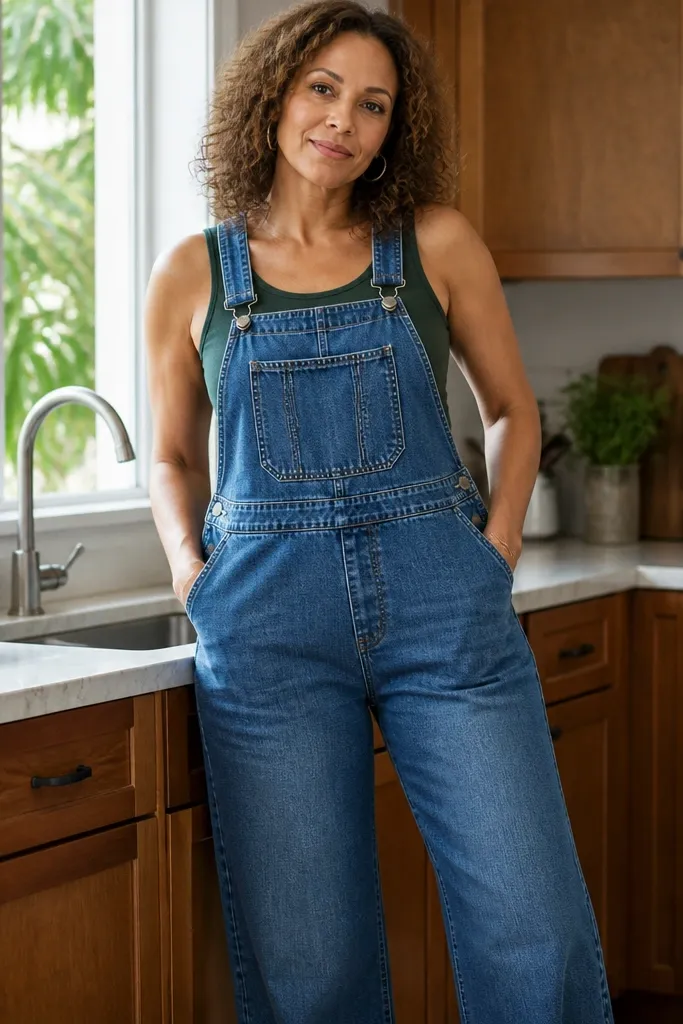
Overalls give you built-in structure, which is perfect for beginners drawing baggy outfits. Draw wide-leg denim overalls with thick straps and a defined bib area, then place a fitted tank underneath to balance the volume. The tank should be close to the torso so your outfit reads as layered, not just bulky. Keep the overalls legs wide and straight, and add one or two subtle seam lines for realism. The look is photogenic because the denim color carries strong visual weight while the fitted tank creates a clean contrast at the chest. It flatters because the bib draws attention upward while the legs stay relaxed.
Good to knowUse thicker line weight for denim seams to make the fabric feel sturdy.
Step 1: Sketch the bib first with two side seams and the strap placement on the shoulders. Step 2: Draw wide-leg overalls as straight outer lines, then add a slight taper only at the ankle if needed. Step 3: Add a fitted tank neckline and simple sneakers, keeping the tank hem visible at the sides.
Watch outDon’t make the tank baggy — the fitted layer is what keeps the silhouette crisp.
11. Baggy sweatpants in deep navy with an off-white bomber
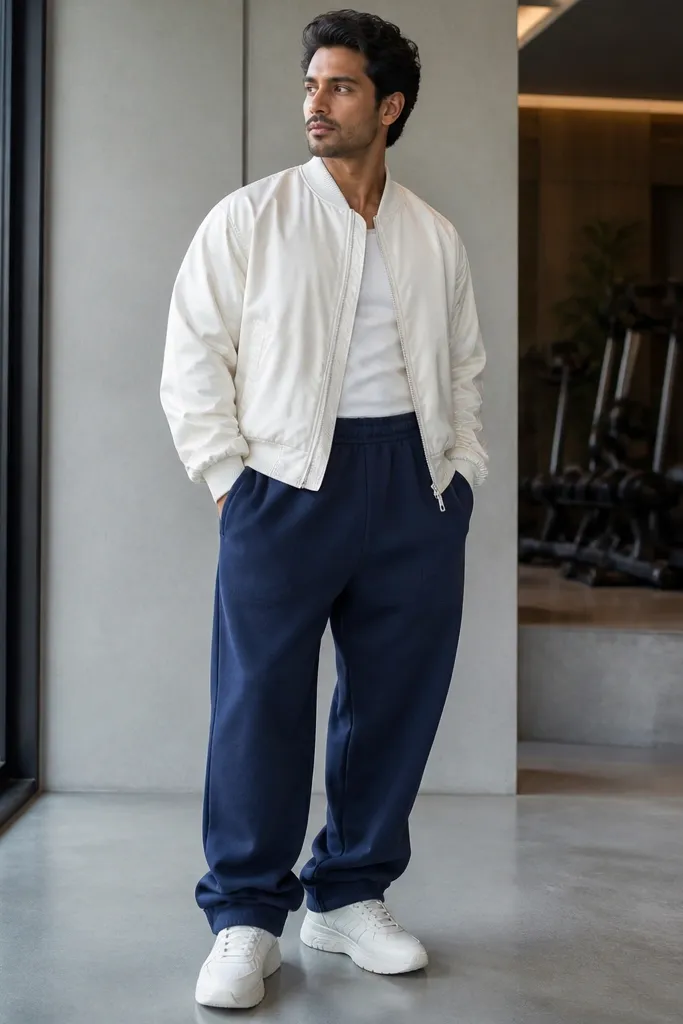
This outfit is clean and readable because navy and off-white look good together in both real life and sketches. Draw an off-white bomber with a slightly shiny finish and ribbed cuffs, then pair it with deep navy baggy sweatpants with a clear waistband and relaxed thigh. The sweatpants should bunch slightly at the ankle if you’re drawing them loose, but keep the hem line readable. The contrast is color-based and also shape-based: bomber structure at the top, soft drape at the bottom. This combo flatters most people because the bomber adds shoulder definition while the sweatpants keep the lower half comfortable without losing shape.
Step 1: Draw bomber cuffs and collar edges first, then add the body as a roomy rectangle. Step 2: Sketch sweatpants with a relaxed thigh and a slightly gathered ankle hem. Step 3: Finish with white sneakers and add a tiny highlight line on the bomber sleeve for that nylon look.
Keep the bomber length at hip height so the sweatpants look intentional.
Don’t add too many pockets on the sweatpants — simplicity reads better.
12. Oversized leather-look jacket + gray cargo pants + belt bag
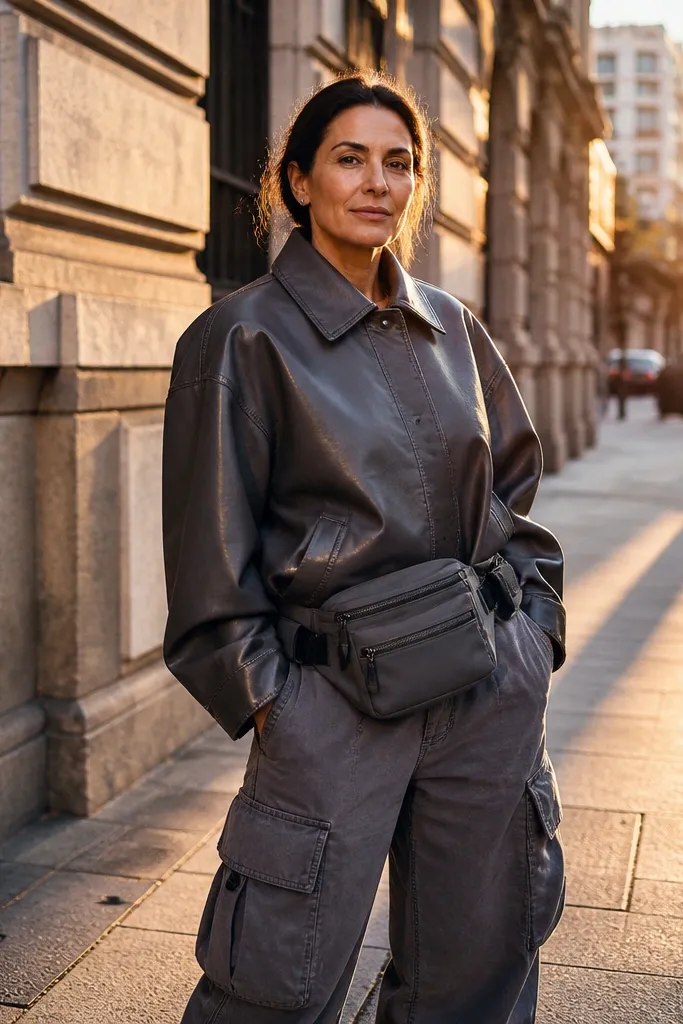
For a baggy outfit drawing that looks street-ready, use a leather-look jacket because its shape is clear even in rough sketches. Draw it oversized in the shoulders and sleeves, then pair with gray cargo pants that have visible pocket structure. Add a belt bag across the waist — it creates a strong horizontal line and gives the outfit a focal point. The belt bag also helps the bagginess look styled instead of random. This set is flattering because the jacket volume balances the cargo width, and the belt bag pulls attention to the waist area. It’s a great choice if you want your drawing to look “put together” with minimal effort.
Good to knowAdd a single diagonal fold at the jacket hem to suggest weight and drape.
Step 1: Sketch the jacket silhouette with a wide shoulder line, front zipper/button line, and defined collar. Step 2: Draw gray cargos with 2-3 pocket blocks per leg and a relaxed straight-to-wide fall. Step 3: Place the belt bag at the front waist, then add chunky sneakers and one strap fold on the bag.
Watch outDon’t place the belt bag too high on the torso — it should sit at the waist line.
13. Long baggy hoodie + short puffer vest + baggy shorts
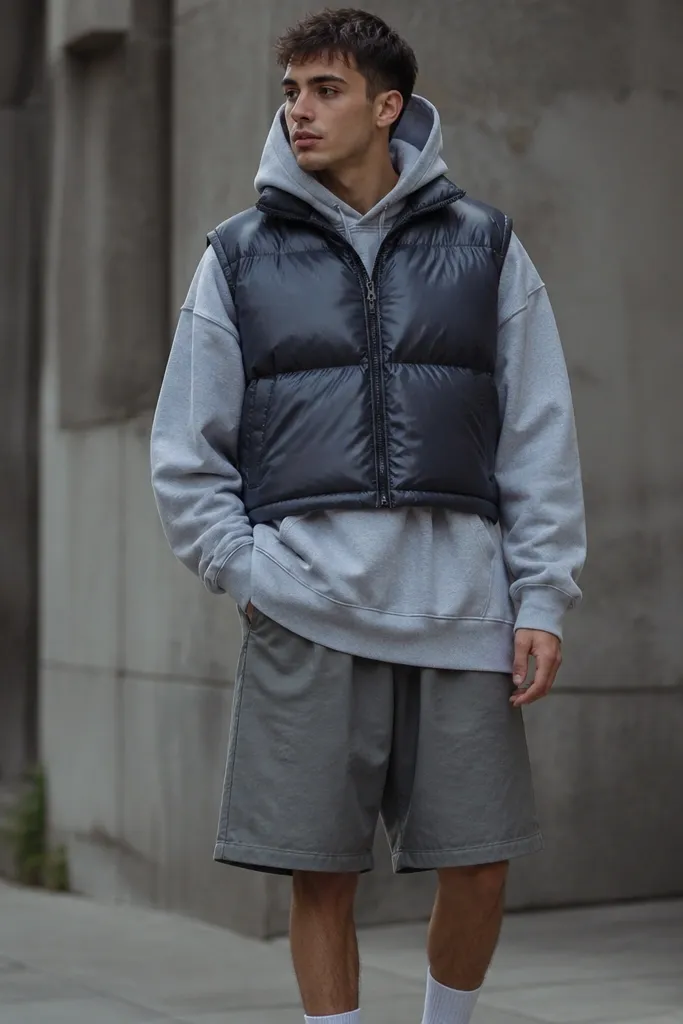
This is one of the most photogenic baggy combos because it mixes lengths in a way that looks designed. Start with a long baggy hoodie that drops well below the hips, then layer a short puffer vest over it. The vest should stop at the waist so it creates a clear break line, then add baggy shorts underneath the hoodie hem. In a drawing, you’ll get strong shape contrast: hood softness, vest structure, and short hem. It flatters because the vest defines the upper body while the long hoodie adds comfort and movement. The shorts bring the look back to proportion so the hoodie doesn’t swallow the whole frame.
Good to knowStitch the puffer in big diamond sections, not tiny ones — it reads better in sketches.
Step 1: Draw the hoodie as the base silhouette with a long hem and hood shape. Step 2: Add the short puffer vest on top, keeping it centered and ending at the waist. Step 3: Draw baggy shorts with a slightly wider hem, then finish with sneakers and a few puffer stitch lines.
Watch outDon’t make the vest too long — the mid-torso break is the whole look.
14. Oversized polo + wide pleated pants in black-and-cream
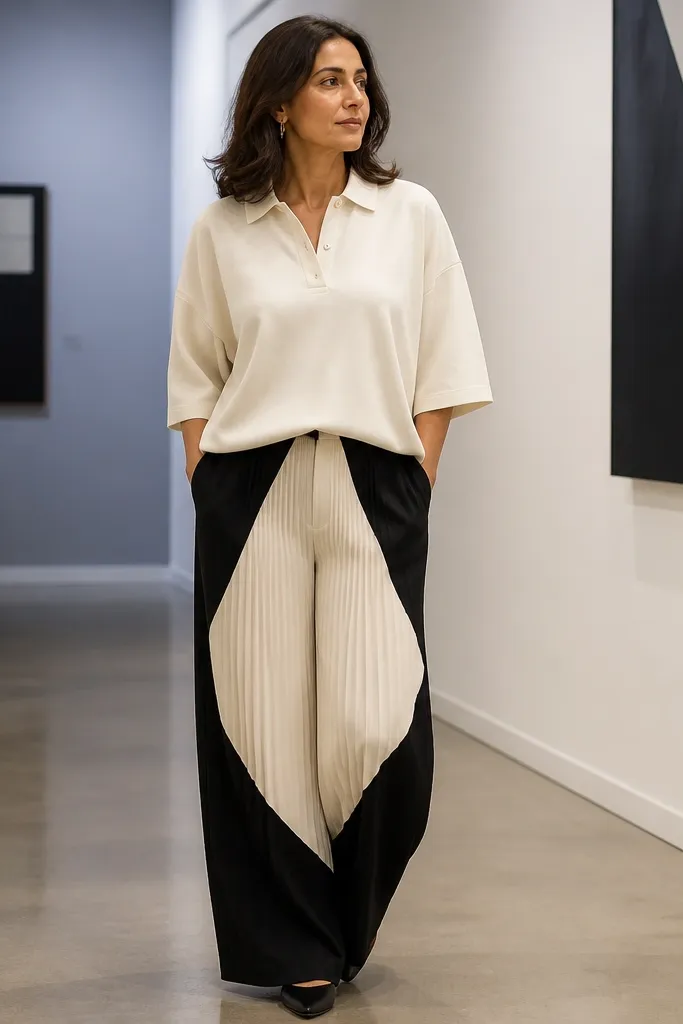
This outfit drawing looks clean because it uses a controlled two-tone palette and strong pleat lines. Draw an oversized polo in cream or off-white with a slightly open collar and relaxed sleeves. Then add wide pleated pants in black, with pleats that run from waistband to knee and fan slightly as they drop. The contrast is crisp: light top against dark bottoms, plus pleats give you repeating lines that look good even without heavy shading. This flatters because the polo collar and placket create structure at the upper chest, while the pleats keep the baggy legs from looking formless. It’s a great choice if you want an aesthetic outfit that still feels wearable.
Step 1: Sketch the polo with a roomy body and sleeves that drape past the upper arm. Step 2: Draw pleated pants with 3-5 pleat lines at the top and wide outer edges to the hem. Step 3: Add a simple shoe like black loafers or white sneakers, then shade the pleats with a light-to-dark gradient.
Put the brightest highlight on the polo collar edge — it makes the sketch look finished.
Don’t choose a polo that’s too short — keep it long enough to balance the wide pants.
15. Baggy suit pants with an oversized tee and long coat
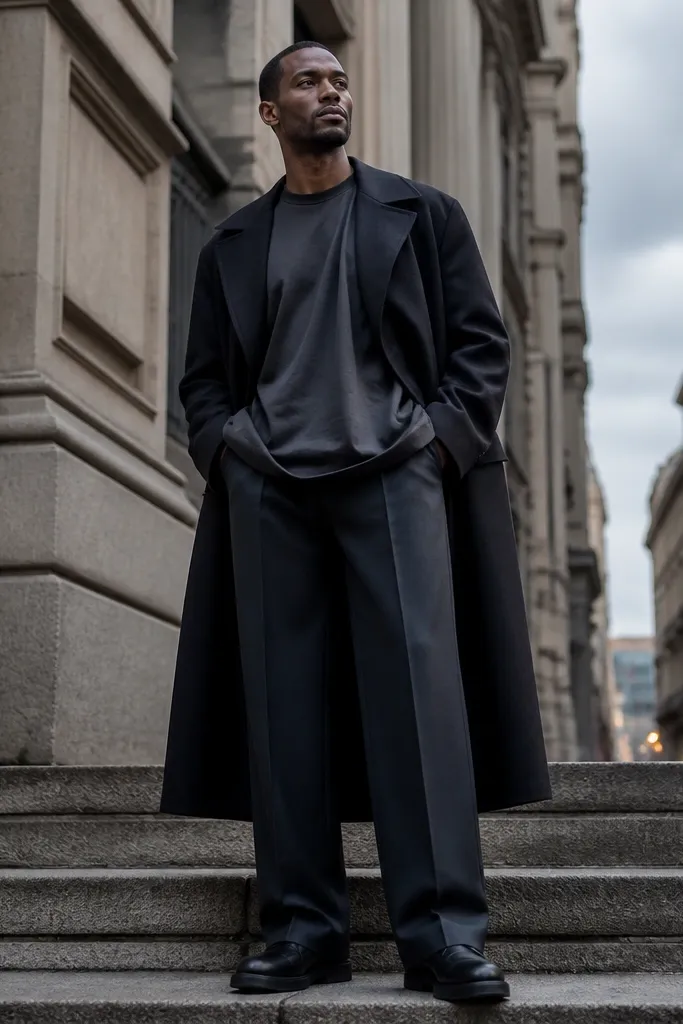
This is the “baggy but sharp” drawing because suit pants have clean structure and the long coat adds drama. Start with an oversized tee in charcoal or white, then draw baggy suit pants with a matte finish and a crisp crease line down the front. Add a long coat that hangs loose over everything, but keep the lapels and sleeve openings clear. The outfit looks aesthetic because the suit fabric gives you sharp geometry while the tee and coat create soft volume. It flatters because the coat frames the torso and the suit crease gives your legs a clean line even when they’re wide. It’s also a smart way for beginners to practice line control — suit pants reward neat drawing.
Step 1: Draw the coat first with a clear front opening and lapel shape, then place the tee neckline under it. Step 2: Add baggy suit pants with a front crease line and wide outer legs, keeping the hem straight. Step 3: Finish with minimal shoes like black leather sneakers or Chelsea boots and add one coat fold line at the side seam.
Use one crease line per pant front and keep it straight — that’s what makes it look sharp.
Don’t blur the pant crease — without it, suit pants look like casual joggers.